Program · SeniorIndependent movement
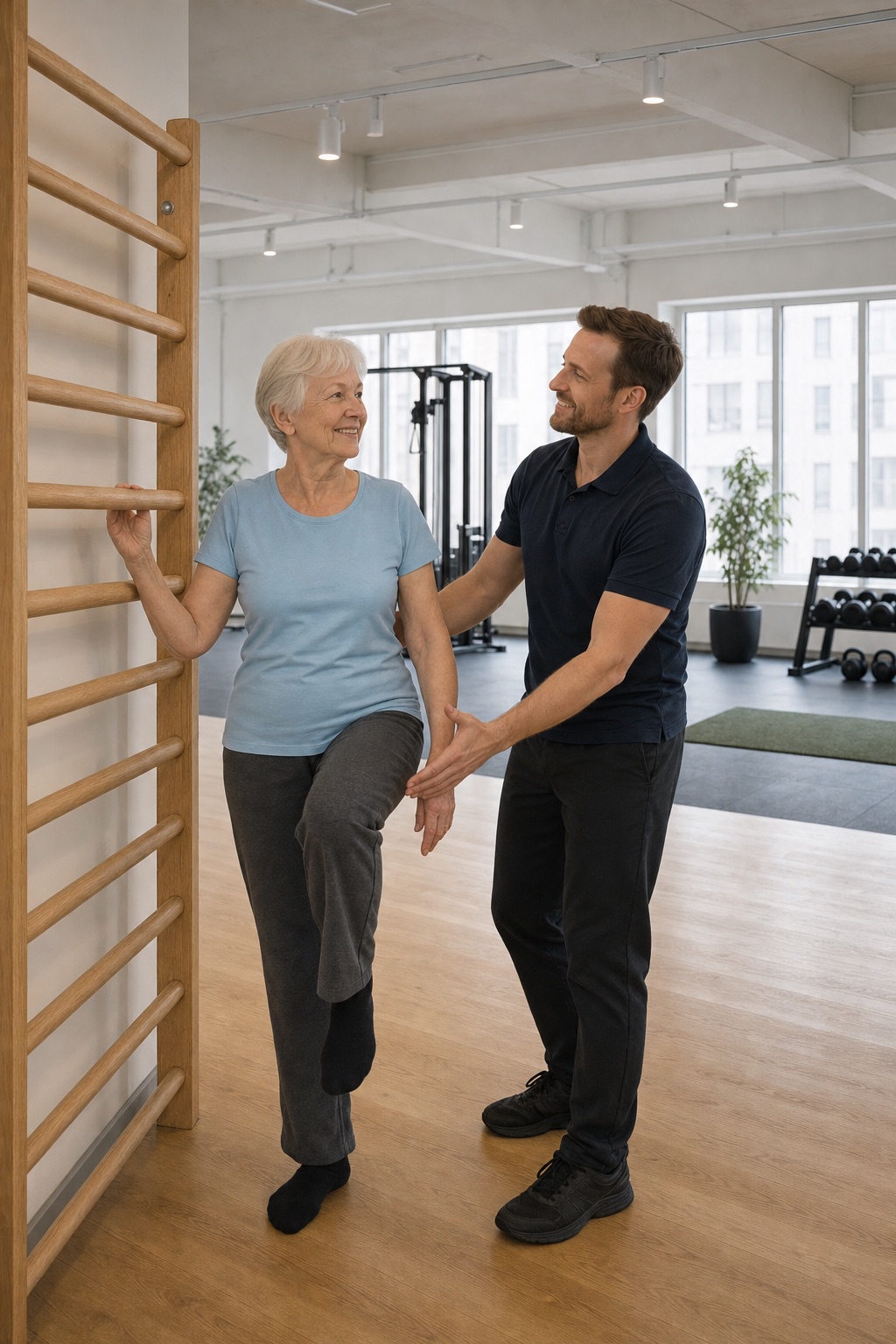
Independent movement
after 60.
12 weeks built slowly at low intensity, for the strength to walk and climb stairs on your own and stay active.
One standardThe same 6 steps for everyone,
The same 6 steps for everyone,
one standard.
Whatever brings you in, the start and the order are the same. Only the pace and where we spend more time change.
- 01Check your bodyPosture & movement analysis
- 02Release what is stiffP-Stretching
- 03Wake up sleeping musclesNeuro-muscular activation
- 04Relearn the basicsPrimal movement
- 05Exercise that fits youTailored exercise plan
- 06Make it a daily habitDaily life
Where we spend more time for this groupWe spend more time waking up balance muscles and relearning daily movement safely.
Used along the wayRF deviceAI posture analysisMore about the 6 steps
Who This Is For
- 60 or older
- Long-standing stiffness or mild decline in movement function
- Want to keep the strength to walk and climb stairs on your own
What we work toward in 12 weeks
- Single-leg balance for 30+ seconds (each side)
- Stand up from a chair without using your hands (5 in a row)
- Climb and descend about 5 flights of stairs comfortably
- Independent daily activity
12-Week Roadmap
The same 6 steps for everyone, at a pace that fits.
Steps 1-3
Release & wake up
Weeks 1–4 / 2x per week- Check baseline fitness and joint range of motion to enable safe exercise
- Restore foot and ankle flexibility that absorbs impact and supports stability while walking
- Gently wake up the glutes that protect the lower back and power your stride
- Foundational training to safely stand up from the floor or a chair on your own
Step 4
Relearn
Weeks 5–8 / 2x per week- Develop single-leg balance to help prevent falls
- Build lower-body strength for daily activities such as climbing stairs
- Practice a smooth walking pattern for stable and confident gait
- Week 8 reassessment to check daily-movement performance and improvements in fitness
Steps 5-6
Make it yours
Weeks 9–12 / 1–2x per week- Simulate safe ways to perform real-life movements such as grocery shopping and cleaning
- A light exercise plan you can do at home alone or with family
- We talk through places and movements at home where falls are more likely
- Week 12 graduation assessment and a regular maintenance plan for ongoing health
Measurements
What we measure. Results vary and are not guaranteed.
Sit-to-Stand reps in 30 secondsChange recorded vs. first assessment
Single-leg balanceChange recorded vs. first assessment
Timed Up and Go (TUG)Change recorded vs. first assessment
Independent daily activityReviewed together
Every program begins
with a posture analysis.
Without an analysis, we can't build a precise plan.