P-Stretching
Not turning off pain,
but opening movement.
P-Stretching (Passive Stretching). Not simple relaxation, but passive care aimed at clinically validated improvements in range of motion (ROM), myofascial gliding, and neural mobility. Releasing isn't the end — it's the entrance to active learning.
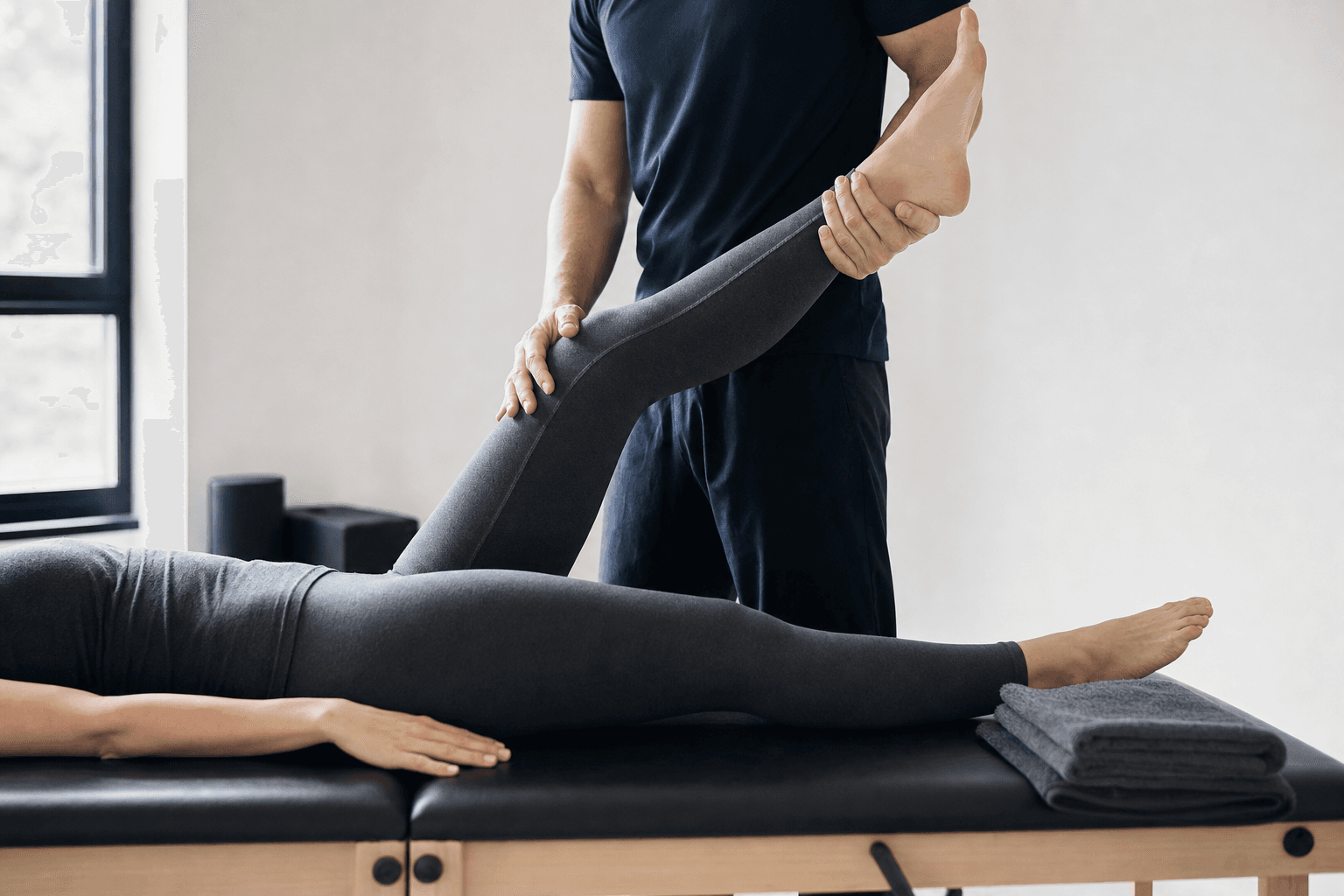
Difference
How it differs from general relaxation care and manual therapy.
| General Relaxation Care | Manual Therapy | P-Stretching | |
| Goal | Relaxation | Pain relief | Movement recovery |
| Basis | Experience | Prescription-based | Sports medicine + rehab |
| Next Step | None | More manual therapy | Connects to active exercise |
| Recurrence Mgmt | — | Weak | Blocked by exercise prescription |
| Tracking Metric | None | Medical record | ROM · NRS · self-adherence |
What We Target
A different approach for each tissue.
Fascia
Restoring gliding through compression + glide
Trigger Points
Releasing the source of pain at precise pressure points
Joint Capsule
Manual mobilization to restore range of motion
Neural Pathways
Restoring neural gliding through Neural Glide
Breathing Accessory Muscles
Releasing the diaphragm and intercostal muscles
The window right after P-Stretching
is the golden time for learning.
We move directly into neuro-muscular activation in the same session.
See the method flow →